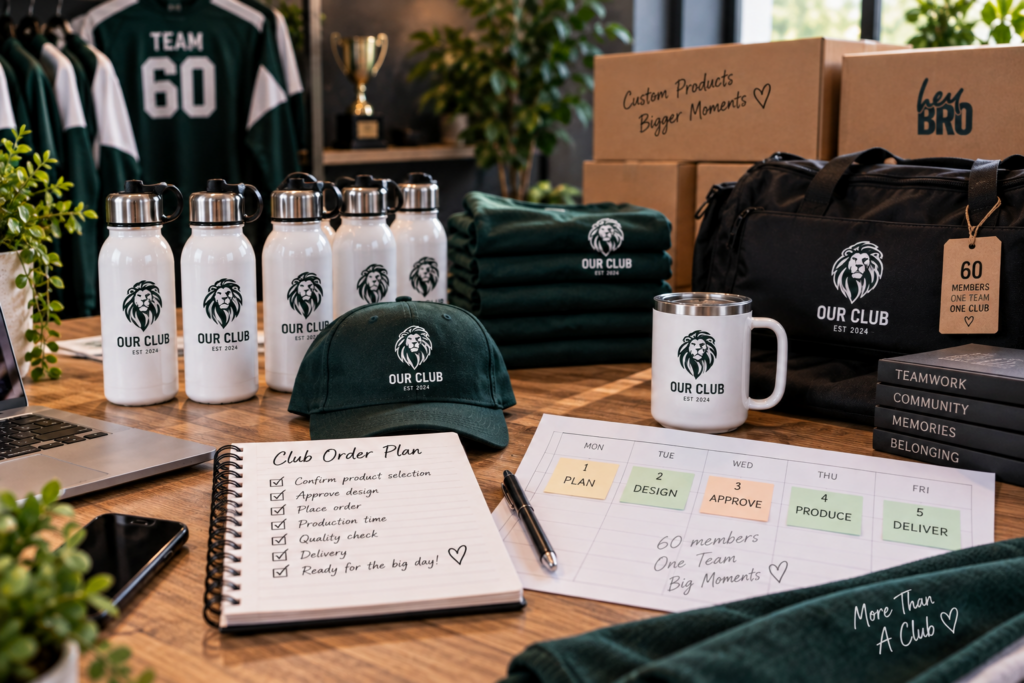
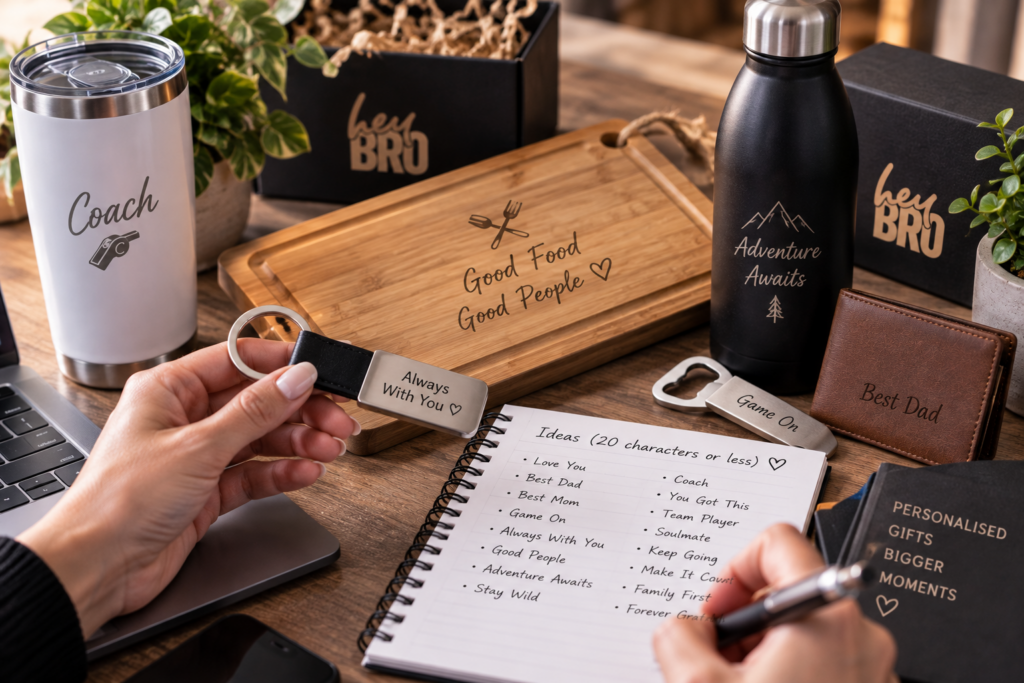
Every personalised product has a character limit, and it is always shorter than you want. A bottle gives you twelve. A keyring tag gives you less. The limit is not us being difficult, it is physics: letters have to stay large enough to read from across a room and deep enough to survive a life in a kit bag.
The good news is that short is usually better. Here is how to spend the characters you have.
Use the name they actually answer to
Full names are a waste of space and rarely how anyone is addressed. If the whole team calls him Bumper, engrave Bumper. If your daughter has been Lulu since she was two, that is the name that will make her smile, not Lourencia. The exception is a formal award piece, where the full name is the point.
A number does more work than a surname
On team gear, a squad number identifies a person faster than letters do and costs you two characters instead of nine. Name on one line, number underneath, and the bottle finds its way back to the right hands after every training session.
If you are stuck between a surname and a number, take the number. It is shorter, it is unique in the squad, and it reads from further away.
Drop the year unless it means something
A date earns its place on an award, a farewell or a milestone. On everyday gear it just ages the piece. A bottle personalised with a name lasts as long as the bottle does. The same bottle marked with a season becomes last season’s bottle in about eleven months.
Watch the characters you cannot see
Spaces count. So do full stops, apostrophes and hyphens. Coach D. is nine characters, not seven. If you are close to the limit, dropping punctuation usually buys you what you need without changing how it reads.
Read it out loud before you approve the proof
We send a proof before anything goes into production, and it is worth thirty seconds of real attention. Read it aloud rather than scanning it. Wrong-but-plausible spellings are the ones that slip through, and they are the only mistakes that cannot be undone once a piece is made.